DSG and S tronic: signs of a mechatronic unit fault
Flashing gear display, limp mode, jerky pull-away. How a DSG or S tronic mechatronic fault shows up and when the unit can be repaired.
Published · The Redline Speed workshop team, Sofia
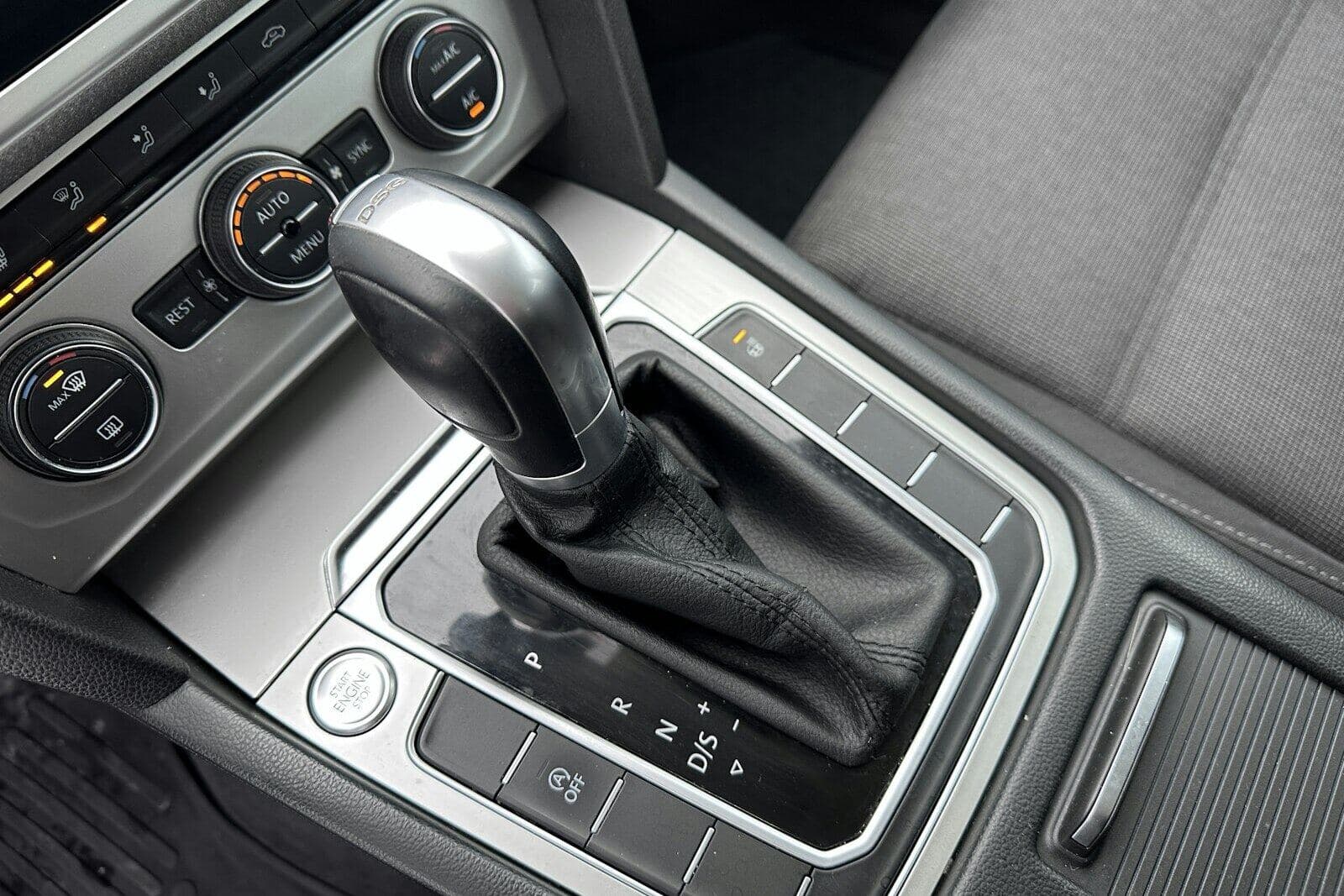
In short: The mechatronic unit controls the clutches and gear changes in DSG and S tronic gearboxes. The usual signs of a fault are a flashing gear display, limp mode, jolts when pulling away and missing gears. Many faults can be fixed by repairing the failed component. A full replacement is needed when the hydraulic housing or the electronics are damaged beyond repair. The decision comes after diagnostics.
What the mechatronic unit does
On VW Group dual-clutch gearboxes (called DSG at VW, Škoda and SEAT, and S tronic at Audi), the mechatronic unit combines the control module, the sensors and the hydraulic valve body with its solenoids in one assembly. It decides when each of the two clutches closes and moves the selector forks that engage the gears. When something in it goes wrong, you feel it straight away.
The gearboxes differ in design and in their weak spots, so it helps to know which one your car has:
- DQ200 (0AM): 7-speed, dry dual clutch, fitted to transverse engines with lower torque. Its mechatronic unit has its own hydraulic circuit with an electric pump and a pressure accumulator, filled with a special fluid kept separate from the gear oil.
- DQ250 (02E), DQ381 and DQ500: 6- and 7-speed, wet dual clutch. The mechatronic unit runs in the gearbox's main fluid and depends directly on its condition.
- DL501 (0B5): the 7-speed S tronic for Audi's longitudinal engines, as in the A4, A5, A6 and Q5. Also a wet dual clutch.
Signs of a mechatronic problem
- The gear indicator or the P R N D S letters flash on the dashboard.
- Limp mode: the gearbox stays in one gear or drives with only some gears, such as only the odd or only the even ones.
- No reverse, or a delay before D and R engage.
- Jolts when pulling away, when creeping in traffic or when shifting between the low gears.
- The gearbox drops into neutral while driving.
- Stored faults for hydraulic pressure, position sensors or solenoids.
Some of these symptoms, especially jolts and judder when pulling away, can also come from worn clutches or a worn dual-mass flywheel. That is why diagnostics start by working out whether the problem is in the control side or in the mechanical parts.
The most common causes
Cracked pressure accumulator housing (DQ200)
This is a well-known failure on the dry 7-speed. The accumulator housing cracks, fluid escapes and the system can no longer hold pressure. The pump runs more often, faults appear and eventually the gearbox goes into limp mode. The usual repair is a new housing from a repair kit, a fresh fluid fill and an adaptation.
Solenoids and pressure sensors
The solenoids regulate pressure to the clutches and the shift mechanism. In wet gearboxes, old fluid carrying clutch wear material speeds up their wear. A faulty solenoid or sensor causes jolts, delayed engagement or the loss of one half of the gearbox. When the part is sold separately, only that part is replaced.
The control module
The control module sits on the gearbox and lives with high temperatures. Over time, joints on the circuit board and the built-in sensors can fail. Some of these faults can be repaired. When they can't, the module is replaced and coded to the car.
Old or wrong fluid
In wet-clutch gearboxes the fluid cools the clutches and feeds the hydraulics. If it isn't changed on time, it loses its properties and contaminates the valves. For the DQ250 the manufacturer specifies a change at about 60,000 km. Our article on automatic gearbox fluid covers the intervals in more detail.
Wiring and connectors
A corroded pin, a damaged wire or oil seeping past the connector seal can log the same faults as a failed solenoid. They are quick to check and should always be ruled out before anything is taken apart.
Telling the mechatronic unit from the clutch
We start by reading the faults in the gearbox module and the related modules. Then we watch live data: pressures, fork positions, clutch slip and adaptation values. With worn clutches the adaptations are usually close to their limits and the judder shows up when pulling away. A mechatronic fault more often brings pressure or position faults and a sudden drop into limp mode.
We also check the fluid level and condition and road-test the car with the gearbox cold and warm, because some faults only appear at a certain temperature. Only then do we decide whether the mechatronic unit needs to come off.
| Symptom | Possible cause | What to do |
|---|---|---|
| Flashing gear display or P R N D S | Mechatronic fault, low hydraulic pressure | Drive as little as possible and book diagnostics |
| Drives only in odd or only in even gears | Solenoid, sensor or hydraulics for one half of the gearbox | Don't keep driving in limp mode; have the faults read |
| Jolt when pulling away and in traffic | Adaptations, worn clutch or pressure solenoid | Check the adaptation values and road-test |
| No reverse | Shift mechanism, position sensor, solenoid | Get a diagnosis before pricing a new gearbox |
| Pressure faults on a DQ200, traces of fluid | Cracked pressure accumulator housing | Repair the housing, refill and adapt |
| Judder when pulling away, no faults | Worn clutches or dual-mass flywheel | Check the clutch before replacing the mechatronic unit |
Repair or replace
A repair makes sense when one component has failed: the accumulator housing, the pump, a particular solenoid or sensor, the wiring and sometimes the control module. The mechatronic unit comes off, gets repaired, goes back on, and the gearbox then goes through its basic settings and adaptations.
We recommend a new or remanufactured unit when the hydraulic housing is cracked or distorted, when its channels are worn or when the electronics have burnt out. A new unit has to be coded to the car and adapted, otherwise the gearbox won't shift properly.
If the diagnosis shows that the clutches are worn as well, it is sensible to do both jobs together, since the gearbox is being opened anyway. We order parts as needed, and you are welcome to bring your own. We explain what we found and what the options are before any work starts.
How to lower the risk of a failure
- Change the fluid in wet-clutch gearboxes on the manufacturer's schedule.
- On a DQ200, hold the car on a slope with the brake, not the throttle.
- Have the car checked at the first flashing display or the first limp mode. Driving on with a faulty mechatronic unit puts extra load on the clutches and the shift mechanism.
- Ask for a gearbox adaptation after any repair or fluid change.
We repair DSG and S tronic gearboxes at our workshop in Vrazhdebna. You can read more on the automatic gearbox repair page, book a diagnostic check or call us on +359 879 000 708.