When and Why to Replace Your Clutch
Signs of a worn clutch, stock versus performance kits, what a replacement involves and what the price depends on.
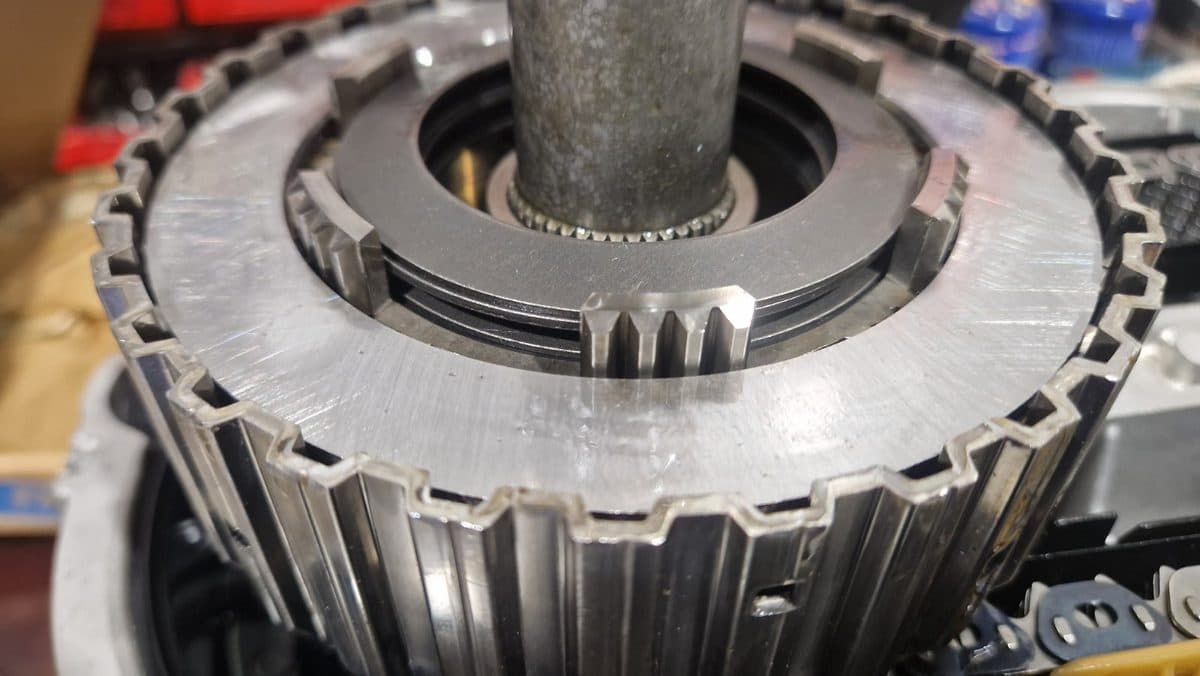
A clutch is a wear item — every pull-away and every gear change wears the friction disc a little. The question is not whether it will need replacing, but when, and which kit suits your car and your driving.
Signs of a worn clutch
- Slipping — under acceleration the revs rise but the car does not speed up accordingly. It shows most clearly in a high gear at low revs.
- High biting point — the clutch only engages at the very top of the pedal travel.
- A burning smell after a hill start or spirited driving.
- Judder when pulling away — often linked to a worn dual-mass flywheel as well.
- Difficult gear changes or noise with the pedal pressed — a possible sign of a release bearing or hydraulic problem.
How long a clutch lasts
In normal use a standard clutch often lasts beyond 150,000 km, but mileage depends heavily on driving style, city traffic, load and towing. On cars with increased power, the factory clutch sometimes starts slipping within months of a remap.
The dual-mass flywheel
Most modern cars, especially diesels, have a dual-mass flywheel that absorbs engine vibrations. It wears too — signs are rattling at idle, a metallic knock when switching off and judder when pulling away. We always check the flywheel during a clutch replacement, because removing the gearbox a second time for it costs almost as much as the clutch job itself.
Which kit to choose
- Standard (OEM quality) — LuK, Sachs, Valeo. Quiet and comfortable; right for factory power and daily driving.
- Uprated organic — for moderately increased power, with almost the same pull-away comfort.
- Cerametallic — Exedy, Competition Clutch and others. Handles much more torque, but engagement is sharper and needs more precise pedal work.
- Multi-plate — ORC and similar. For track and competition, where low weight and high torque capacity matter; not suited to daily city driving.
The right choice depends on the engine's real torque and how the car is used. An overly aggressive clutch on a road car is as poor a choice as a standard one on a car with twice the power.
What a replacement involves
The gearbox is removed and the friction disc, pressure plate and release bearing (on many cars a hydraulic concentric slave cylinder) are replaced. The flywheel, the crankshaft rear seal and the hydraulics are inspected. If the seal leaks we replace it at the same time — oil on a new disc quickly leads to slipping.
What the price depends on
The price is made up of the parts kit and the labour, which varies a lot between models — on cars with a transverse engine or all-wheel drive the job is more involved. We give an exact quote once we know the make, model and engine.
If you notice any of these signs, book a drivetrain check — replacing a slipping clutch in time saves money, because it also wears the flywheel.