Whine or clunk from the differential: what it means
Whine on and off the throttle, a growl that rises with speed, a clunk when pulling away. What each differential noise means and what to do.
Published · The Redline Speed workshop team, Sofia
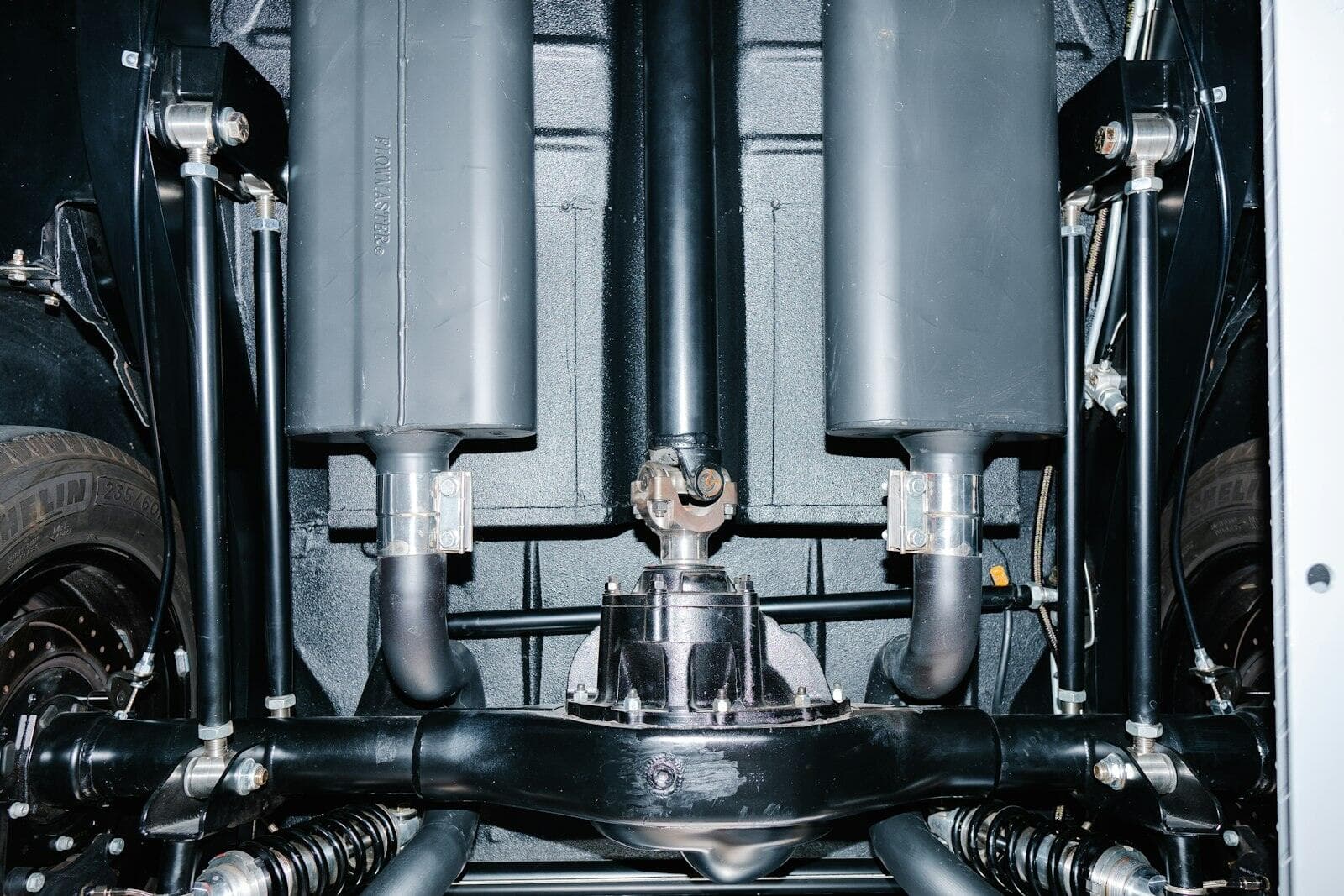
In short: A differential whine you hear only under acceleration or only when you lift off usually means a worn crown wheel and pinion, or pinion bearings that have lost their preload. A growl that rises with speed most often comes from bearings. A clunk when you get on the throttle points to excess gear backlash or to worn mounts and joints. The first step is always to check the oil level and condition.
How to describe the noise
Differentials rarely fail all at once. There is nearly always a noise first, and it grows over time. The more precisely you can say when it happens, the faster the cause is found. Note the following:
- Do you hear it accelerating, lifting off, or both?
- Does it depend on speed, and at what speed is it loudest?
- Does it change in left or right turns?
- Is there a clunk when pulling away, when shifting or when going from throttle to brake?
Whine
A whine is a high, steady tone that rises and falls with road speed. In a differential it usually comes from the mesh between the pinion and the crown wheel.
Whine only under acceleration
Under power the teeth are loaded on one side. If the contact between them is wrong or the surface is worn, you hear it on the throttle and it fades at a steady cruise. The cause can be wear, a past shortage of oil or poor setup after an earlier repair.
Whine when lifting off
On the overrun the teeth are loaded on their other side. A whine only in this mode often means the pinion bearings have lost their preload and the pinion is moving. It is an early sign and worth checking before the wear reaches the gears.
Whine in both modes
This usually means the gears or bearings are further gone. The noise grows over time and eventually can be heard at a steady speed as well.
A growl that rises with speed
A low rumble or growl that gets louder as you go faster usually comes from bearings: the differential carrier bearings, the pinion bearings or the wheel bearings.
Wheel bearings give themselves away in turns. When the load shifts onto the bad bearing the noise gets louder, and it eases in the opposite turn. If the noise doesn't care which way you turn, the differential is the more likely source.
Unevenly worn tyres can make a similar sound. We check them on the road test, so that a healthy differential doesn't get rebuilt by mistake.
Clunks and knocks
A clunk when pulling away or switching between throttle and brake
A dull knock as the drivetrain takes up load means there is play somewhere. It can be in the differential itself: worn teeth, worn spider gears or too much backlash between pinion and crown wheel. Just as often it is outside it. On many rear-drive cars, BMWs included, the differential's rubber mounts wear and let it move in the subframe. Loose propshaft or driveshaft joints give the same symptom.
Clicking in turns
A rhythmic click in turns usually comes from a CV joint on a driveshaft. The differential is rarely the source of that sound.
Chatter in tight turns
On a clutch-type limited-slip differential, chatter when parking usually means the oil lacks the friction additive the plates need, or the oil is old. Changing to the right oil often cures it. Our article on LSD differentials covers the different types.
How we diagnose it
- Road test. We note the speed and load at which the noise appears and whether it changes in turns.
- Oil. We check the level and condition. Metal on the drain plug magnet shows how far the wear has gone.
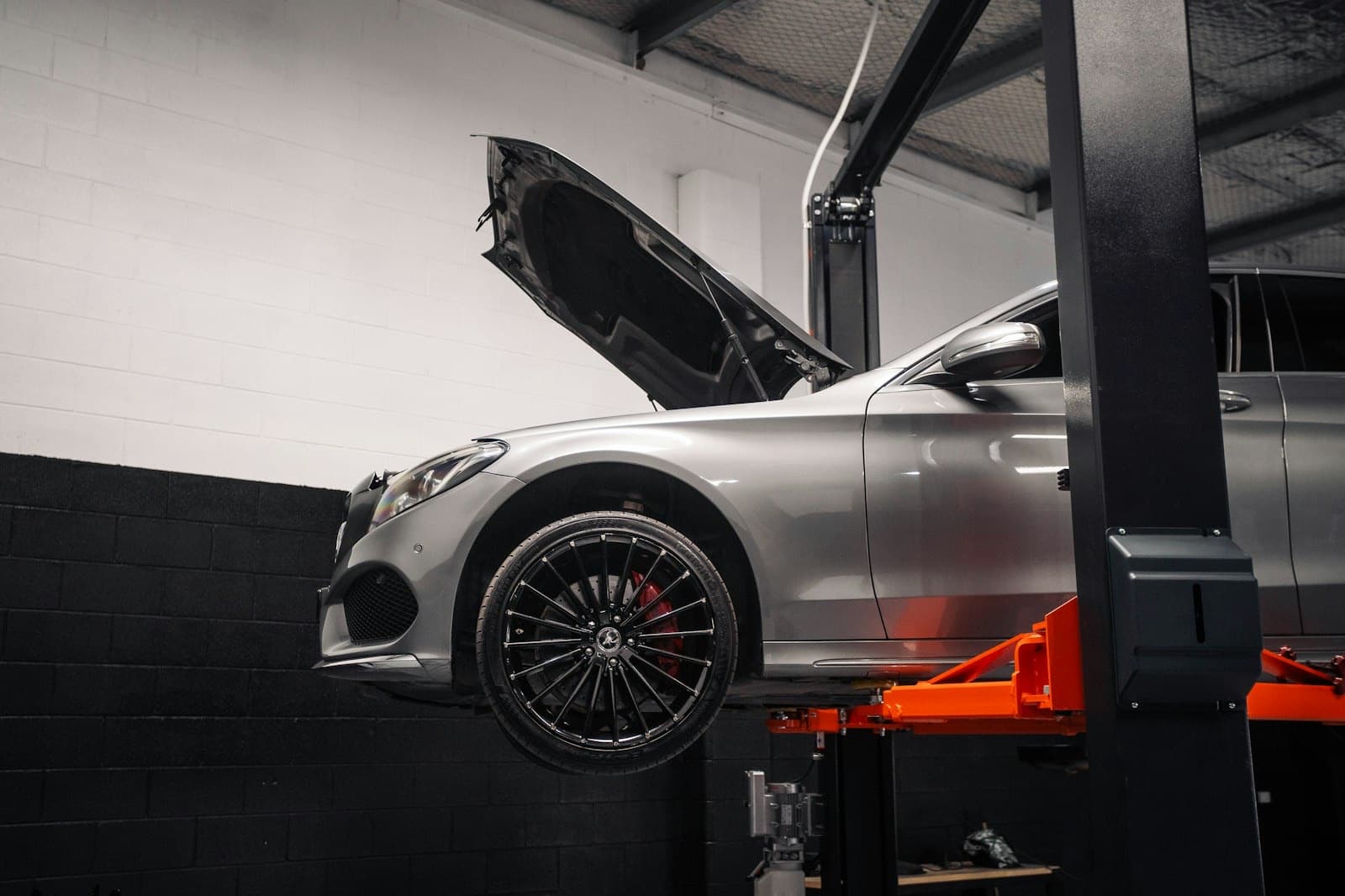
- On the lift. With the wheels turning we listen to the bearings. With the car stopped we check pinion flange play, the differential mounts and the propshaft and driveshaft joints.
- Strip-down if needed. We inspect the gears, bearings and spider gears and check the contact pattern between pinion and crown wheel.
| Symptom | Possible cause | What to do |
|---|---|---|
| Whine only under acceleration | Worn teeth or poor pinion and crown wheel contact | Check the oil and inspect before the wear gets worse |
| Whine only when lifting off | Pinion bearings with lost preload | Check pinion play and replace the bearings |
| Growl rising with speed, same in turns | Differential carrier or pinion bearings | Lift inspection and a check of the oil for metal |
| Growl that changes in turns | Wheel bearing | Check the wheel bearings |
| Clunk when pulling away | Worn mounts, joints or excess backlash in the differential | Inspect the mounts, propshaft and driveshafts |
| Chatter in tight turns (LSD) | Old or wrong oil | Change to oil that meets the differential's specification |
| Oil on the differential housing | Leaking pinion or output shaft seal | Replace the seal and top up to the correct level |
What the repair involves
If the oil is old or low and the noise is faint, changing to the correct oil sometimes stops the problem from progressing. We don't recommend thicker oil or additives meant to quieten the noise. They only hide the wear for a while.
With worn bearings, the differential is stripped and the bearings replaced. Then pinion bearing preload, pinion depth and the backlash between pinion and crown wheel are set. The setup is checked by the contact pattern, using marking compound. The pinion and crown wheel are only ever replaced together as a matched set, because they are run in to each other.
Leaking seals and worn mounts are replaced separately, usually without opening the differential. We order parts as needed, including from Japan and the US, and you are welcome to bring your own.
When not to wait
A whine that gets louder over a short time, a new knock or a metallic noise, or an oil leak are all reasons to drive less and have the differential checked. A worn bearing that breaks up can damage the gears and the housing, and then the repair becomes a much bigger job.
We repair standard and limited-slip differentials at our workshop in Vrazhdebna. See the differential repair page, book a check or call us on +359 879 000 708.