Timing Chain Stretch: Warning Signs on BMW and VW TSI
How a stretched timing chain shows itself on BMW N47 and N20 and VW/Audi TSI (EA888) engines, how it is checked and when to stop driving.
Published · The Redline Speed workshop team, Sofia
In short: A stretched timing chain usually shows up as a brief rattle on cold start, a metallic noise or whine from the timing end of the engine, and fault codes for crankshaft/camshaft correlation. It is a well-known problem on the BMW N47 and N20 and on first- and second-generation VW/Audi 1.8 and 2.0 TSI (EA888) engines. If you hear it, get it checked soon: on these engines a chain that jumps a tooth can let the valves hit the pistons.
What a "stretched" chain actually is
The links themselves barely stretch. Over the miles, the pins and bushings in every link wear and each joint picks up a little play. Added up along the whole chain, that play makes it noticeably longer. The tensioner takes up the extra length up to a limit. Past that limit the chain starts slapping the guides, the camshafts drift out of phase with the crankshaft, and the engine management logs the deviation.
Long oil change intervals, oil without the right approval and lots of short trips where the engine never fully warms up all speed the wear up. Our article on choosing engine oil covers the oil side.
Common signs
- A rattle lasting one to a few seconds on cold start, especially after the car has stood for a day or more.
- A metallic noise, rustle or whine from the timing end, clearest at idle or changing with revs.
- A check engine light with crank/cam correlation codes. On petrol engines these are often P0016 or P0017.
- Rough idle, harder starting or a feeling of reduced pull.
None of these proves a worn chain on its own. Similar noises can come from the high-pressure fuel pump, hydraulic lifters, the accessory belt drive or the exhaust. The car needs to be checked before anyone orders parts.
BMW N47 (2.0 diesel)
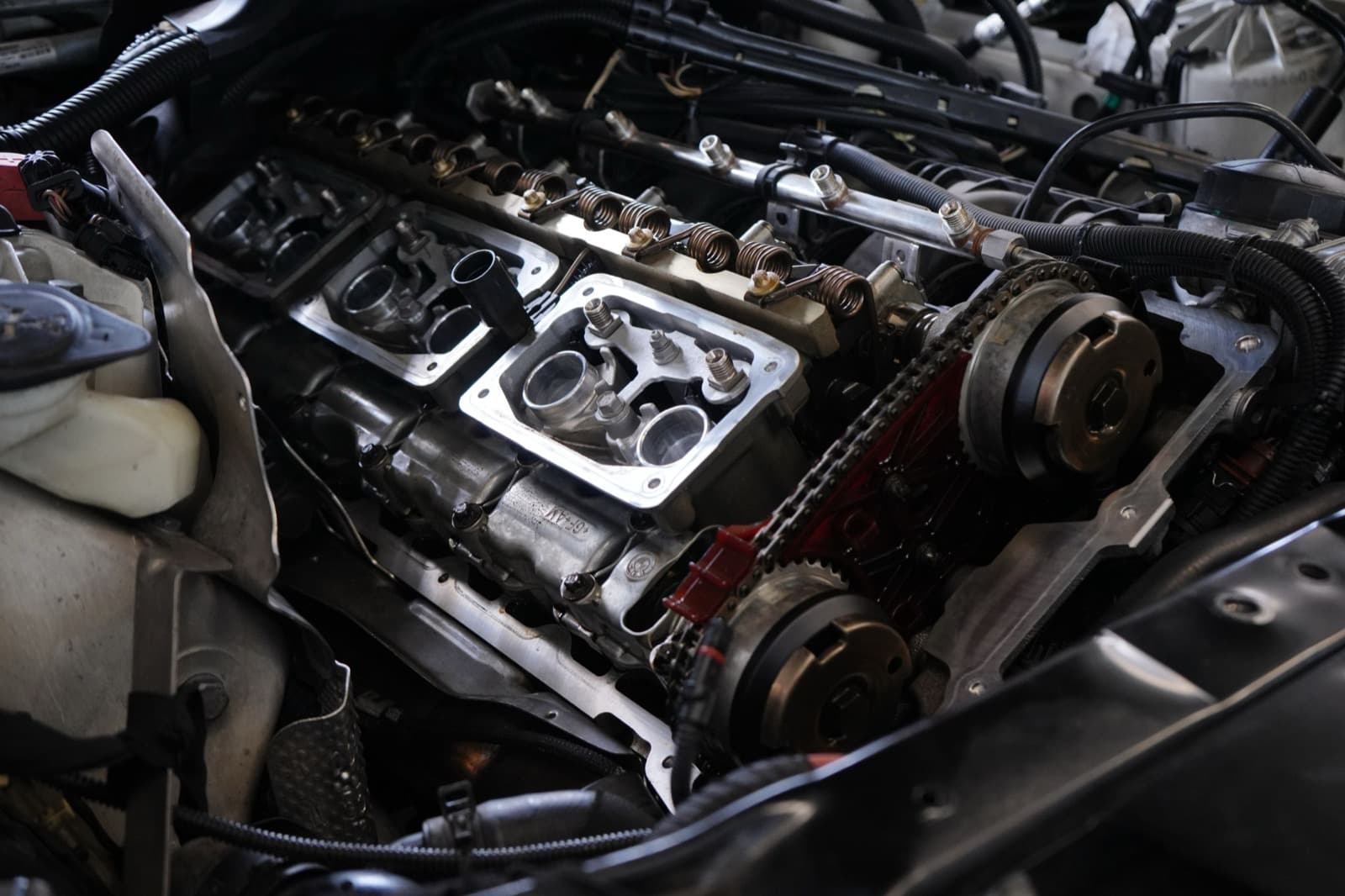
The N47 has its timing drive at the back of the engine, on the gearbox side. Chain trouble is most common on engines from the early production years (roughly 2007 to 2011). BMW later revised some of the parts, but newer engines can still wear the chain, particularly with extended oil change intervals.
The typical sign is a metallic noise or whine from the rear of the engine. It is easiest to hear at idle with the bonnet open, and sometimes from the cabin when you lift off the throttle. Because the chain sits at the back, the repair usually means taking the engine out of the car. That is a big job, and a good reason not to wait for the chain to break.
BMW N20 (2.0 turbo petrol)
The N20 has its timing chain at the front. Its known weak point is the plastic chain guides, which crack and break with age, along with wear on the chain that drives the oil pump. The usual symptom is a whining or whistling sound, most obvious when the engine is cold and at low revs.
If pieces of a broken guide end up in the sump they can restrict the oil pump pickup, so a proper check includes looking for debris. BMW revised some parts during production, which means the risk depends on the build date and on whether the timing drive has already been repaired.
VW/Audi 1.8 and 2.0 TSI/TFSI (EA888 gen 1 and 2)
These engines, built roughly from 2007 to 2013, have two separate issues. The first is the early chain tensioner, which can lose pressure while the car is parked. On start-up the chain is briefly slack and, in the worst case, jumps a tooth. The second is ordinary chain wear and stretch at high mileage.
The cold-start rattle is the key warning. On the EA888, the phase deviation between camshaft and crankshaft can be read as a measured value with a diagnostic tool. Some versions also have an inspection plug in the timing cover that shows how far the tensioner has extended. Which tensioner is fitted is confirmed by its part number or by previous repair paperwork. The build year is a useful hint, but plenty of cars have already had parts replaced.
The third-generation EA888 has a revised timing drive and fewer problems, though its chain will still wear if the oil is changed rarely.
Symptoms and what to do
| Symptom | Possible cause | What to do |
|---|---|---|
| Rattle for 1–3 seconds on cold start | Tensioner losing pressure when parked; stretched chain | Have the tensioner and cam timing checked before the car sits for long |
| Metallic noise or whine from the back of the engine (N47) | Worn chain and guides | Diagnostics and a listen; avoid high revs until it is checked |
| Whine at low revs on a cold engine (N20) | Cracked guides, worn oil pump chain | Inspect the timing drive and check the sump for plastic fragments |
| P0016 or P0017, rough idle | Timing out of phase from stretch or a jumped tooth | Measure the cam timing; if the noise is loud, don't drive the car in |
| Oil pressure warning light | Low oil level or a problem with the oil pump drive | Switch the engine off immediately and don't restart it until it is checked |
How the chain is checked
We start with questions: when the noise appears, how long it lasts, how often the oil has been changed and whether the timing drive has been repaired before. Then comes computer diagnostics, reading the fault codes and, where the engine allows it, measuring cam timing. After that we listen to the engine on a cold start and at idle, and inspect the tensioner and guides if needed.
A genuine cold start tells us the most, so it helps to leave the car with us the day before, letting the engine stand for several hours before it is started.
What the repair involves
Replacing just the chain rarely makes sense. The usual job covers the chain, tensioner and guides, plus sprockets, seals and any one-time-use bolts as needed. The N47 is the biggest job because the engine comes out. On the EA888 and N20 the work is done with the engine in the car, but it needs dedicated locking tools to set the timing exactly.
We can order the parts, or you can bring your own. We recommend genuine parts or brands with a good track record on that engine, because a poor tensioner or guide can bring the problem back quickly.
How to lower the risk
- Change the oil more often than the maximum interval, especially if you mostly drive in town.
- Use oil with the approval the manufacturer specifies for your engine.
- Don't ignore a short cold-start rattle just because it goes away after a few seconds.
- When buying a used car with an N47, N20 or EA888, ask for timing chain repair records and book a pre-purchase inspection.
If your engine rattles on cold start or shows cam timing codes, call +359 879 000 708 or book an appointment and we will check the chain before it turns into a bigger repair.